
Revimo
Revimo Inc.
Industrial Design, Brand Identity, Visualization
Team: Sebastian Gomez-Puerto (Design Manager), Germán Monetti (Lead Industrial Designer), Aref Zebian (Jr. Industrial Designer & Brand Designer)
RESTORING DIGNITY TO MOBILITY, ONE TRANSFER AT A TIME
THE CHALLENGE
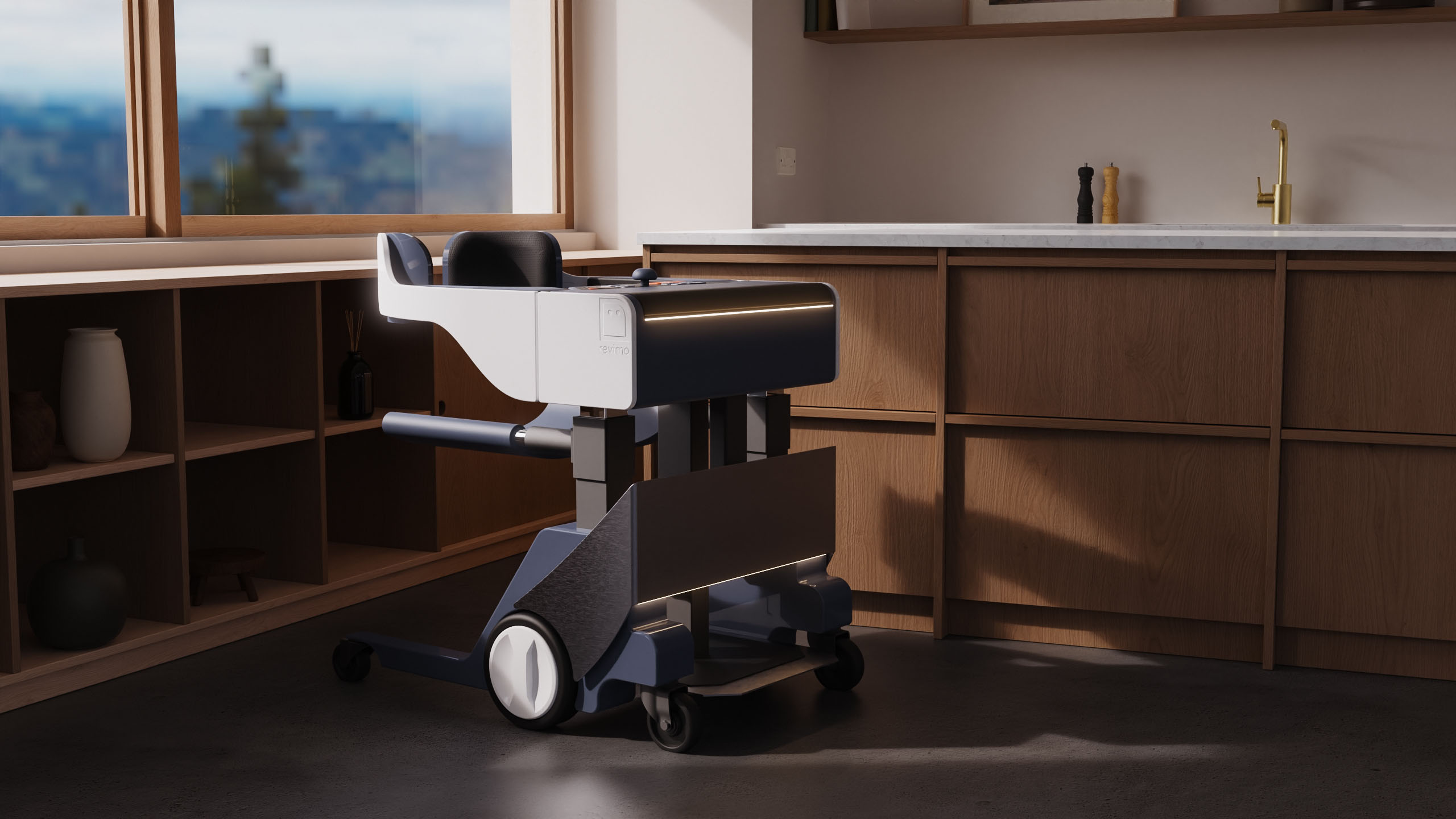
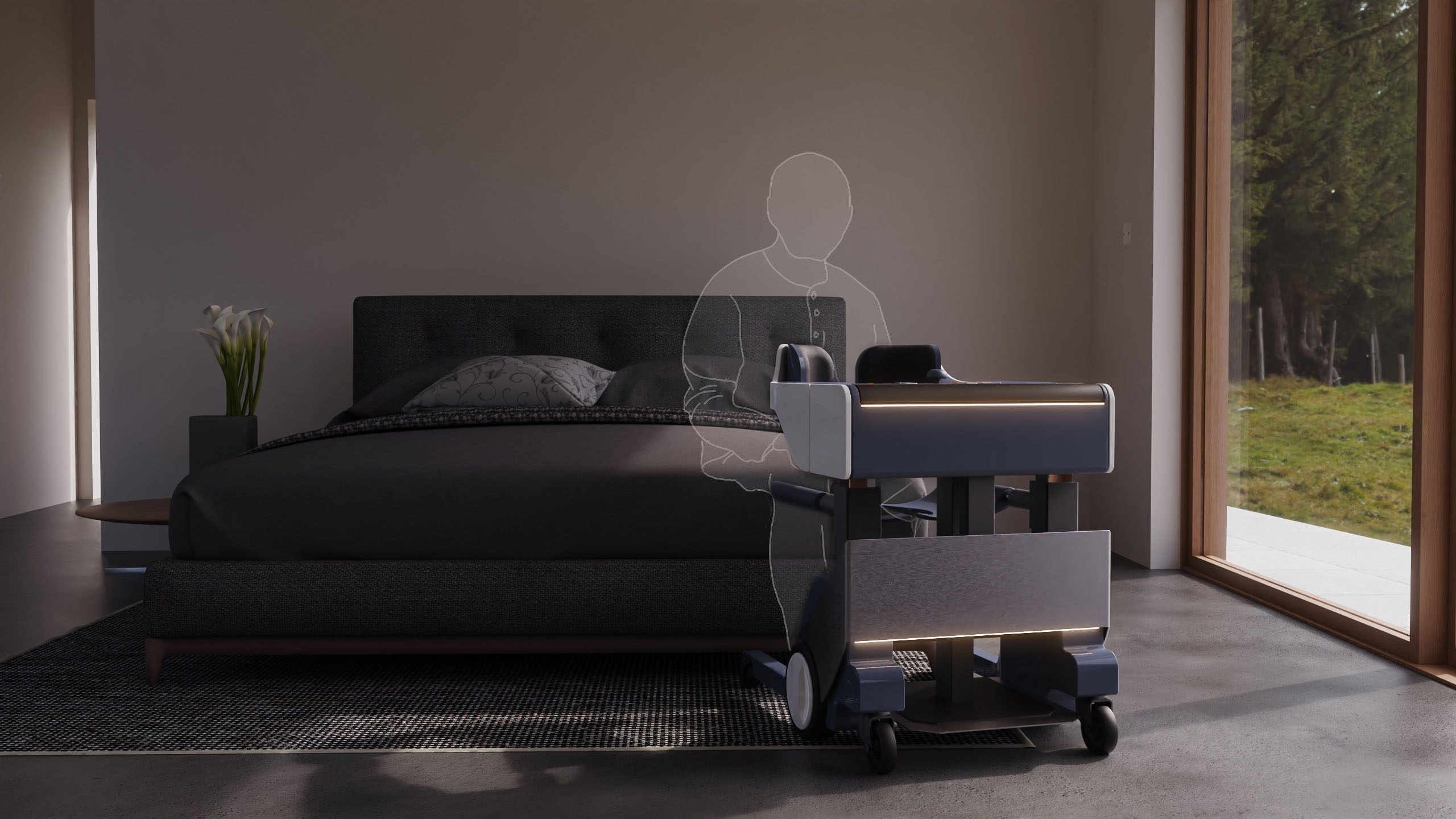
Aleksandr Malashchenko and his team at Revimo had engineered something that could change lives: a patient transfer device that combines the functionality of a patient lift with a powered wheelchair. For the millions of people aging in place and their caregivers, this could mean independence instead of dependence, dignity instead of helplessness.
The technology worked. But Revimo was a Techstars company with startup constraints, not a medical device giant with a design department. The top industrial design firms wanted six-figure retainers and 12-month timelines. Aleksandr needed a partner who could move at startup speed, work within a real budget, and genuinely care about the mission.
That's why he came to us.
WHY THIS PRODUCT MATTERS
Every day, millions of elderly and mobility-impaired people face the same vulnerable moment: getting out of bed. Getting off the toilet. Moving from wheelchair to car. These transfers are where injuries happen, where dignity erodes, where independence slips away.
The existing solutions look like what they are: medical equipment. Cold. Clinical. Institutional. They turn homes into hospitals and people into patients. They remind users of their limitations every time they see them.
Revimo set out to change that. The Niko isn't just a transfer device. It's a chance for people to age in place, in their own homes, surrounded by their own things, with their independence intact.
This is exactly the kind of product the world needs more of. Not another gadget. A device that improves health outcomes and preserves human dignity.
OUR THINKING
The original Niko prototype had exposed mechanical components, sharp angular forms, and an industrial color palette. It looked like hospital equipment because it was designed like hospital equipment.
We took a different approach.
Through observational research, we explored the daily challenges faced by people with mobility disabilities. What we found went beyond ergonomics. The biggest barrier wasn't physical. It was emotional. Existing mobility devices made users feel like patients in their own homes.
We also studied neuroaesthetics: how color, texture, and form affect our feelings and experiences. Blue and green hues lower heart rate and blood pressure. Smooth textures evoke tranquility. These weren't just aesthetic choices; they were design decisions grounded in how humans actually respond to their environment.
Our goal was clear: transform a clinical apparatus into a trusted companion.
THE SOLUTION
We evolved the Niko through three intentional shifts:
Soft Forms Over Sharp Angles
The original device had exposed frames and mechanical joints. We wrapped the structure in smooth, organic lines that embrace rather than constrain. Every surface the user touches was designed to feel reassuring, not institutional.
Approachable Materials
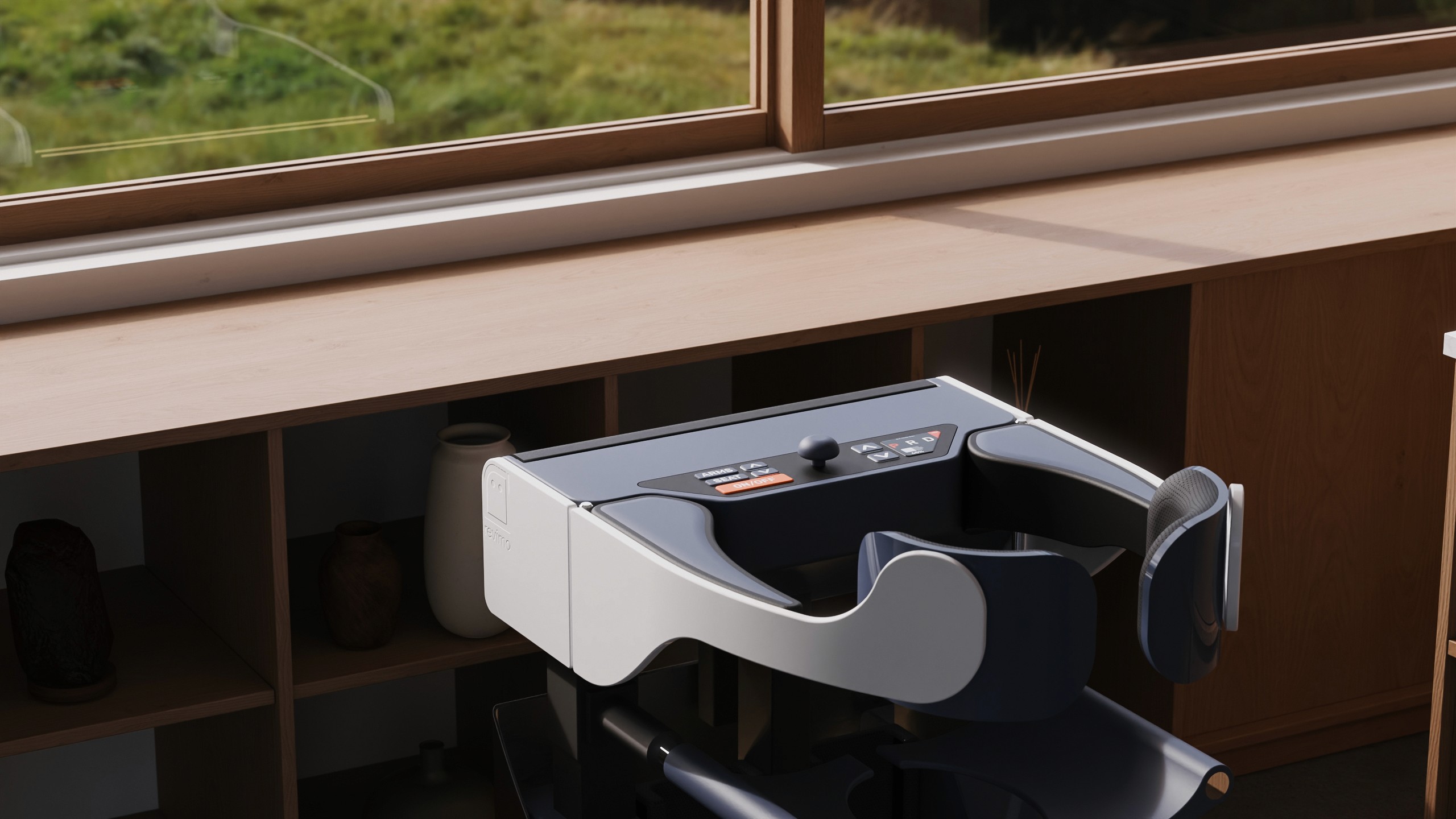
The armrests and cushions face constant moisture and wear. We specified polyurethane foam with a Dycem exterior, materials that ventilate, resist moisture, and feel comfortable against skin. Meridian Blue became the signature color, chosen not because it looked modern, but because research shows blue hues create a calming physiological response.
Intuitive Controls
The control interface was simplified to be operable without instruction. Large, clearly marked inputs. Logical placement. The device should empower independence, not require a caregiver to operate.
Indoor-Outdoor Mobility
The wheel system was redesigned for versatility: smooth enough for indoor flooring, robust enough for outdoor terrain, with a tight turning radius to navigate home environments.
THE OUTCOME
The redesigned Revimo Niko is now helping the company achieve its mission:
For people:
• A mobility device users actually want in their homes with intuitive controls that empower independence
• A design that preserves dignity instead of eroding it
For caregivers:
• Easier, safer patient transfers
• A tool that feels like help, not burden • Peace of mind for families
For the founders:
• A design ready for investor presentations and trade shows (Techstars 2024 presentation with the new design)
• CES 2026 debut on the global stage
• Overwhelmingly positive user feedback
Why We Took This Project
Aleksandr and his team weren't building a medical device to flip for a quick exit. They were trying to solve a problem that affects millions of families, including their own. They had the engineering talent. They had the Techstars backing. What they needed was a design partner who genuinely cared about their mission.
That's the work we exist to do.
The world doesn't need more disposable gadgets. It needs products that improve health outcomes and help people live with dignity. The Revimo Niko does both. We were proud to help bring it to life.